
Shocking Rise in Microplastics Found in Human Brains
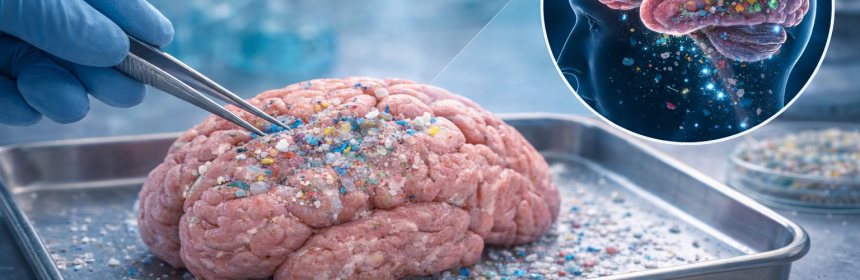
Recent research is painting an unsettling new picture of human health: tiny plastic particles called microplastics and nanoplastics have been detected in human brain tissue — and levels appear to be rising over time. These findings are drawing alarm from environmental scientists and health experts alike.
📈 What Did the Study Find?
A study published in Nature Medicine examined human brain samples collected in 2016 and again in 2024. Researchers found:
- The amount of microplastics in the brain was about 50% higher in 2024 compared to 2016 samples.
- Microplastics were present at significantly higher concentrations in brain tissue than in the liver or kidneys.
- Brains from individuals with dementia contained several times more microplastics than those without dementia — although scientists stress this is an association, not proof of causation.
These particles — often smaller than a grain of sand — can originate from everyday sources like plastic packaging, textiles, and degraded waste. Their tiny size allows them to enter the bloodstream and potentially cross the blood-brain barrier.
📊 Microplastic Trends in Human Brains
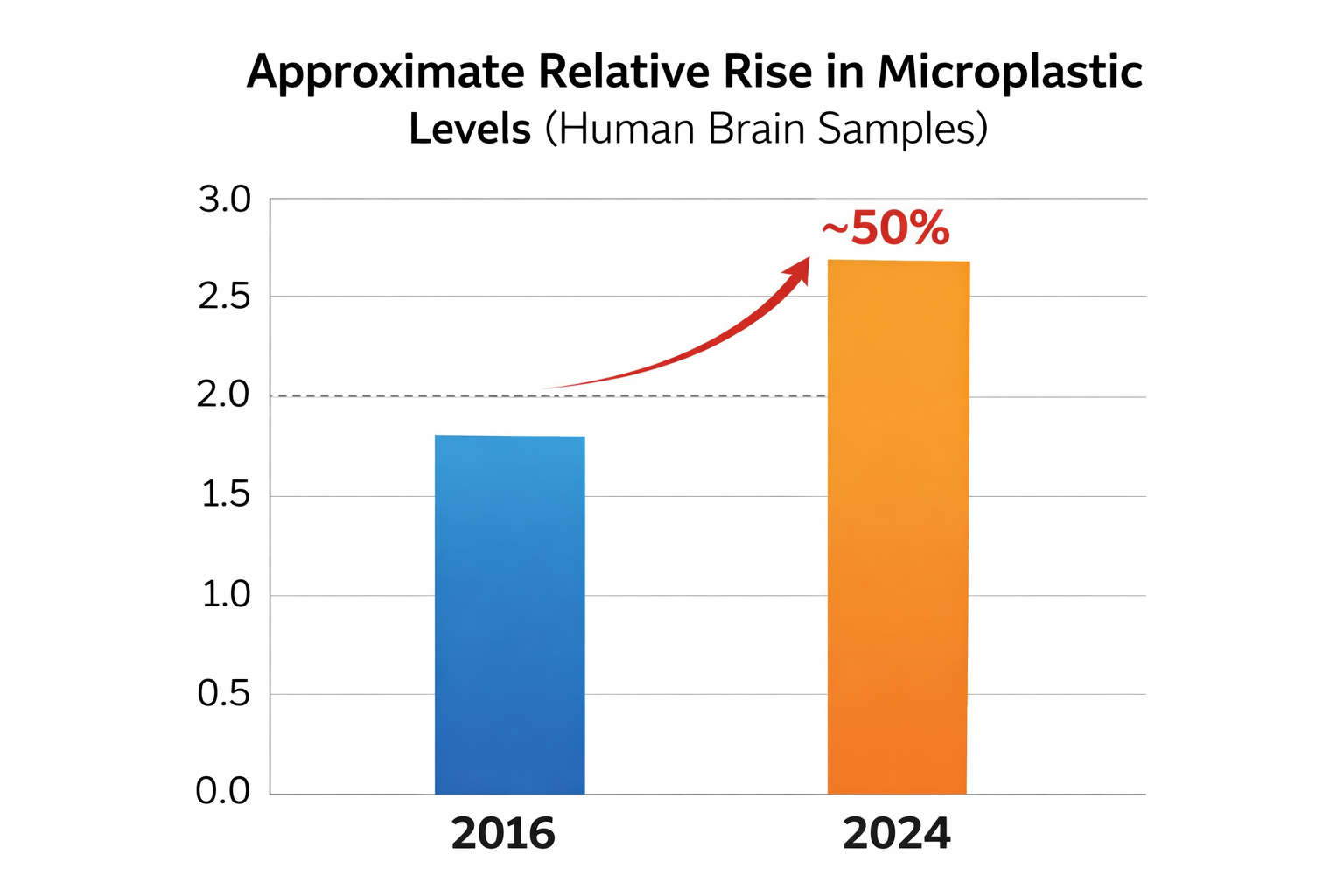
Chart: Approximate relative rise in microplastic levels between 2016 and 2024.
🧠 Should You Be Worried?
Some scientists urge caution. While the presence of microplastics in the brain is now supported by research, experts say:
- The health impacts remain poorly understood — there’s no definitive evidence yet that microplastics cause neurological diseases.
- Methodological challenges make measuring these particles extremely difficult, leading some researchers to suggest early results may overstate the reality.
- A comprehensive review of studies shows microplastics and nanoplastics can trigger inflammation, oxidative stress, and cellular changes in lab and animal studies — but human effects remain uncertain.
Despite uncertainty, many experts agree this emerging field of research deserves attention — especially given the billions of tons of plastic produced worldwide each year.
References:
Kuta S. The Human Brain May Contain as Much as a Spoon’s Worth of Microplastics, Smithsonian Magazine (covers Nature Medicine study).

Osaka S. Our brains are filling with more and more microplastics…, The Washington Post (analysis of Nature Medicine data).

PubMed/Nature commentary: Your brain is full of microplastics — are they harming you? (Nature) — DOI:10.1038/d41586-025-00405-8.

Ragusa A. & Fanos V. Microplastics and nanoplastics in the brain: neurodevelopmental risks, JPNIM review.

AFP/ScienceAlert: Microplastics Are Infiltrating Your Brain — What Are the Effects? (expert caution).

Vox: We have to stop freaking out about every new microplastics study — caveats and skepticism.

Systematic review on microplastics toxicity across human tissues.