Grandma orcas know best

Like many human families, killer whales often rely on the wisdom of matriarchs to help them endure hardships and thrive, new research has found. Male orcas usually live for about 50 years, but females often survive well into their 90s, making them one of the few mammalsthat live for decades after they stop reproducing.   Marine scientists studied the behavior […]

Read more

Ancient Boiling Oceans

In its early days, Earth became hell. About 3.3 billion years ago, new research indicates, at least two massive asteroids 30 to 60 miles in diameter smashed into this planet, boiling the oceans and sending atmospheric temperatures soaring to an unimaginable 932 degrees Fahrenheit. Stanford University scientists have found evidence of this extreme era in a geological formation in South […]

Read more

Oklahoma – The New Earthquake Epicenter

Oklahoma - The New Earthquake Epicenter

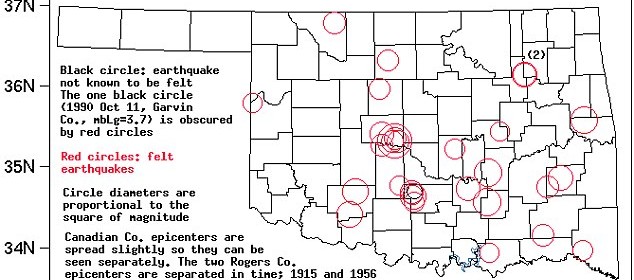
America’s earthquake epicenter was once California. Now it’s Oklahoma. In 2014 there were nearly 300 times as many magnitude 3.0 and greater earthquakes as there were in 2008—and more quakes of that magnitude than in the prior 30 years combined. The cause? Scientists can’t say definitively, but new research funded by the U.S. Geological Survey notes that as quakes increased […]

Read more

Lasting Impact of Deepwater Disaster

  It’s been five years since the Deepwater Horizon oil rig exploded in the Gulf of Mexico, killing 11 and releasing a torrent of petroleum into the sea. But despite a massive, multibillion-dollar cleanup effort, the effects of the largest marine oil spill in U.S. history may linger for decades. BP (British Petroleum), which operated the rig, has already paid […]

Read more

When the Red Planet was partly blue

Astronomers have found the strongest evidence yet that ancient Mars had a massive ocean for millions of years— an indication that the Red Planet once had everything necessary to support life. Shortly after Mars formed 4.5 billion years ago, NASA scientists say, the planet was wet, with enough water to cover the entire planet to a depth of about 450 […]

Read more

100 Year Old Box of Negatives Found Frozen In Antarctica’s Ice

100 year old box of negatives

While restoring one of the exploration huts in Antarctica, Conservators of the New Zealand Antarctic Heritage Trust discovered a 100 year old box that turned out to be a remarkable treasure. It contained 22 never-before-seen cellulose nitrate negatives documenting the life of Antarctic explorers a 100 years back. Preserved in a block of ice, this 100 year old box of negatives […]

Read more

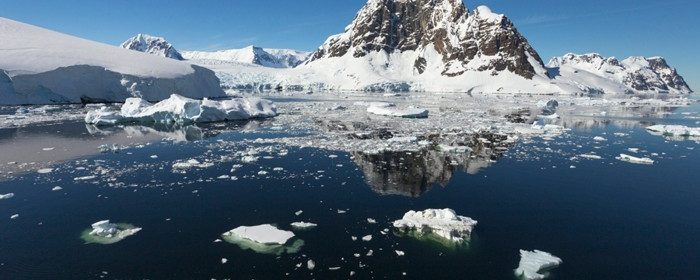
Nasa: Antarctic ice-shelf will be gone by 2020

According to a new study by Nasa, Antarctica’s Larsen B ice-shelf is on course to completely disintegrate within the next five years. Studies show that the 10,000-year-old ice shelf, after partially collapsing in 2002, is “quickly weakening.” “These are warning signs that the remnant is disintegrating,” said Ala Khazendar of Nasa’s Jet Propulsion Laboratory (JPL) in Pasadena, California. “Although it’s […]

Read more
1 2 3 24