When the oceans became acidic

When the oceans became acidic

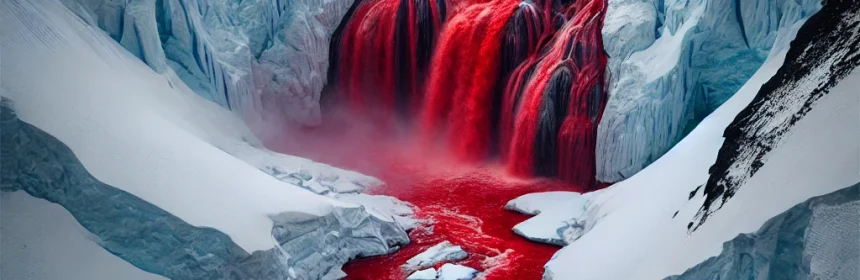
Colossal volcanic eruptions some 250 million years ago have long been linked to the widespread global extinction known as the “Great Dying“, a 60,000-year period that saw 90 percent of all sea creatures and more than two-thirds of all plants and animals on land die off. But new research has for the first time identified the specific cause of the […]

Read more

Record-Breaking Heatwave Causes Intense Arctic wildfires

Uncontrolled wildfires ravage the Arctic

More than 100 intense Arctic wildfires have ravaged the Arctic since June, with scientists describing them as “unprecedented.” Satellite images show huge clouds of smoke billowing across uninhabited Arctic land in Greenland, Siberia and parts of Alaska. The wildfires come after the planet experienced the hottest June on record and is on track to experience the hottest July on record, […]

Read more

King Crabs Are Invading Antarctica

King Crabs Are Invading Antarctica

The waters off the west coast of Antarctica has started to warm up over the past 50 years. The temperature has risen about 2.5 degrees Fahrenheit, warmer than the average water temperature worldwide.  It has reached the temperature of 34 degrees which is warm enough for king crab to survive.  Normally the king crab live on the continental slopes and […]

Read more

Climate change helps Alaskan grow organic food on the tundra

Between fighting wildfires and rerouting the Iditarod, Alaska has had a tough time with climate change. But at least there’s one good outcome: local food. In Bethel, a town in southwestern Alaska, farmer Tim Meyers is taking advantage of rising temperatures to grow food in the previously inhospitable tundra. NPR reports: At the 15-acre organic farm, which has been operating for more […]

Read more

Vines strangle carbon storage in tropical forests

Tropical forests account for a third of the total carbon fixed by photosynthesis. Lianas’ increasing abundance may be driven by changing climate, increased disturbance or by more severe seasonal drought. By reducing the ability of tropical forests to accumulate and store carbon released through burning fossil fuels, lianas could cause a positive feedback loop, accelerating climate change. “This study has […]

Read more

The Man Who Removed His Own Appendix

Leonid Ivanovich Rogozov was a Soviet general practitioner who took part in the sixth Soviet Antarctic Expedition in 1960–1961. He was the only doctor stationed at the Novolazarevskaya Station and, while there, developed appendicitis, which meant he had to perform an appendectomy on himself, a famous case of self-surgery. Leonid Rogozov was born in Dauriya Station, Chita Oblast, a remote […]

Read more
1 2 3 4 24