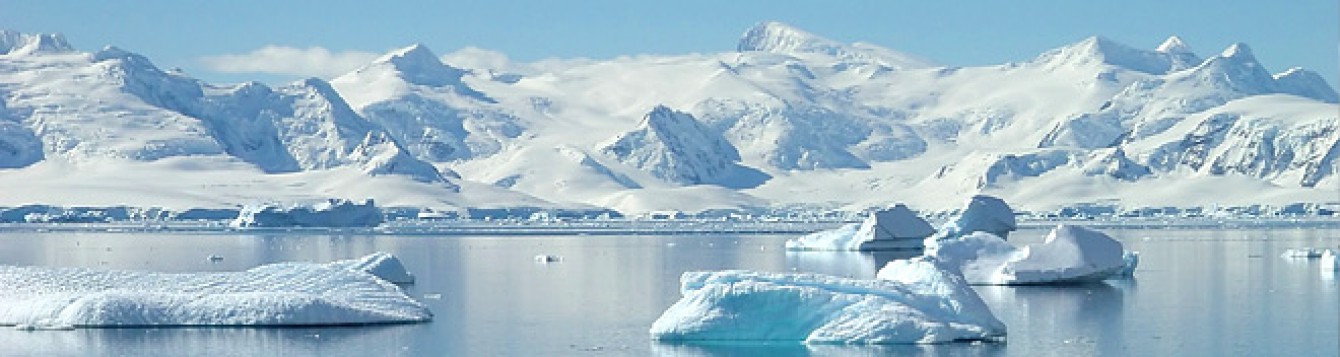
How Sea Ice Forms

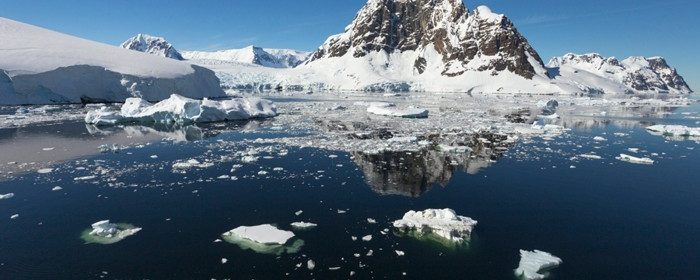
Sea ice is formed from ocean water that freezes. Because the oceans consist of saltwater, this occurs at about minus 1.8 degrees Celsius (28.8 degrees Fahrenheit). Most Antarctic sea ice occurs annually, meaning it forms in the winter and melts during the summer. Sea ice regulates exchanges of heat, moisture and salinity in the polar oceans. It insulates the relatively warm […]

Read more

Antarctica’s Native Insect

Antarctica’s Native Insect - Antarctica Journal News

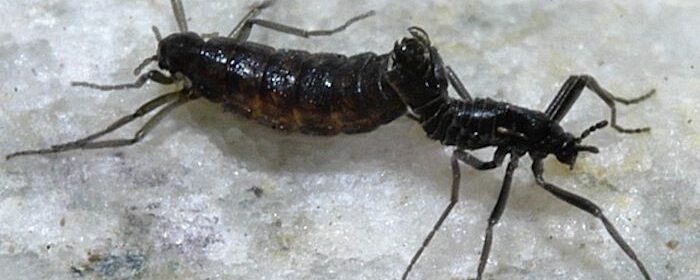
Antarctica’s native insect, the Antarctic Midge is a flightless insect that can survive nine months frozen at temps of at least negative 15 degrees Celsius.  It loses about 70% of its body fluids and can live for about a month without oxygen.  The midge survives because of its combination of rapid cold hardening and warm temperatures in its underground habitat.  […]

Read more

International team of scientists reports on Antarctic lead pollution

Researchers from Australia, Denmark, Germany, Norway, United Kingdom, and the United States conducted lead concentration measurements of sixteen ice core samples, and found that industrial air pollution has persisted Antarctica since its arrival there in 1889 and remains significant in the current century. Their study was published in Scientific Reports on July 28, and covered in Nevada‘s Review journal. Lead […]

Read more

Scientists Locate Earth’s Largest Canyon

Durham University, leading a team of international researchers believe they have discovered the largest known canyon on Earth. Utilizing precise satellite data and ground-penetrating radar, they have calculated it to be over 62 miles long and over half a mile deep at some points. More precise measurements will be necessary to confirm these findings, although that will be a difficult […]

Read more

Adventures in Antarctica

Adventures in Antarctica

When you travel to Antarctica you are in for a trip of a lifetime.  Because of its location you are required to travel with a government scientific program or have a private expedition take you there.  The over 50,000 tourists that travel there every year find the sightseeing and wildlife watching most adventurous.  Unless you can sail your own boat, […]

Read more

Gamburtsev Mountain Range – Hidden Peaks Beneath the Ice

Gamburtsev Mountain Range

Deep beneath Antarctica’s vast ice sheet lies one of the most mysterious and least explored mountain ranges on Earth—the Gamburtsev Mountain Range. First discovered in 1958 by a Soviet expedition, these peaks, stretching about 1,200 kilometers (750 miles) across East Antarctica, remain hidden under more than 4,000 meters (13,000 feet) of ice, making them a scientific enigma. A Subglacial Mountain […]

Read more

The Arctic’s ozone hole

The ozone layer over the Arctic Circle developed a giant hole this winter, scientists say. Over the North Pole, 40 percent of the ozone layer has disappeared—a record seasonal loss. Ozone high in the atmosphere shields the Earth from harmful UV rays, and it fluctuates seasonally; usually about 25 percent of the Arctic’s ozone layer fades every winter. In the […]

Read more

The Coldest Place on Earth

East Antarctic Ice Sheet - Coldest Place On Earth

According to National Geographic, the coldest place on Earth is the East Antarctic Ice Sheet with temperatures as low as minus 144 degrees Fahrenheit. The temperature reading was taken during the polar winter and is the lowest temperature ever recorded on the Earth. Russia’s Vostok Weather Station previously held the record for the lowest recorded temperature. However, that record has […]

Read more
1 6 7 8 9