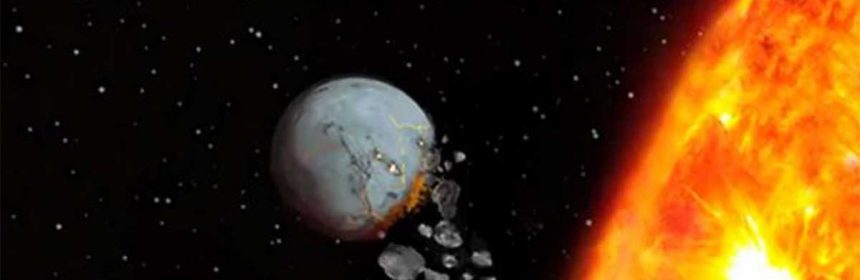
ARE STARS REALLY EATING PLANETS?

ARE STARS REALLY EATING PLANETS?

Astronomers have found that Tabby’s Star has been at it again – going through a dimming phase.  Tabby’s star is located in the constellation Cygnus which is about 1600 light years away.  Researchers have come up with the explanation that this star at one time ate a planet which is causing it to flicker.  Some also think that its possibly […]

Read more

Titan’s Surface Much Like That of Earth

Titan's Surface Much Like That of Earth

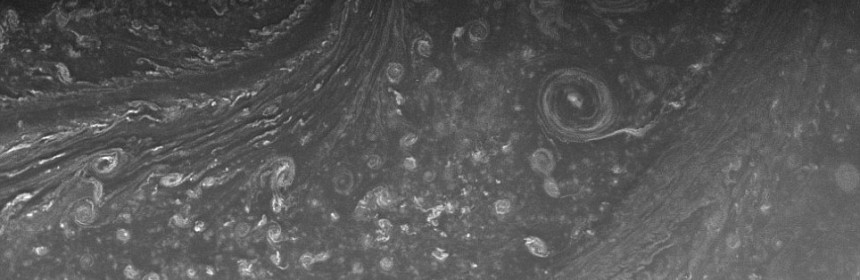
Saturn’s moon Titan may be light-years away from Earth, but the two bodies have many characteristics in common: Wind, rain, volcanoes, tectonics and other Earth-like conditions all sculpt features on Titan, but act in an environment many times colder than Antarctica. “It is really surprising how closely Titan’s surface resembles Earth’s,” said Rosaly Lopes, a planetary geologist at NASA’s Jet […]

Read more

Russia has plans to nuke Earth-bound asteroids, if necessary

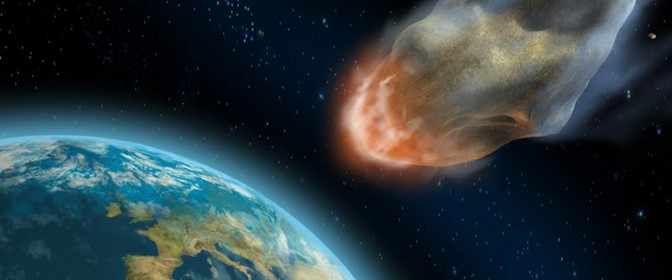
From 2012 to 2015, Russia researched ways of deflecting Earth-bound asteroids using nuclear weapons and came up with a best-case scenario. The Central Scientific Research Institute of Machine Building, an arm of Russia’s state-run Roscosmos space agency, worked on the asteroid problem with other countries (including the United States) in a program called NEOShield, which was largely funded by the […]

Read more

The most Earth-like planet yet

Have we found Earth’s twin? For the first time, astronomers have identified a planet outside our solar system that is both Earth-size and orbits its star in the so-called Goldilocks zone, where temperatures may be “just right” for supporting liquid water—and, therefore, life. Researchers discovered the planet while reviewing data from NASA’s Kepler space telescope, which has spent the past […]

Read more

Strange Plumes On Mars

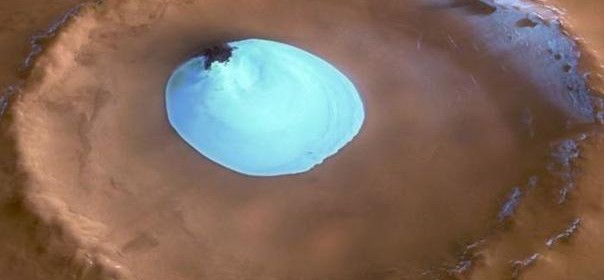
  Mysterious plumes of gas rising more than 150 miles above the surface of Mars have left scientists confounded. On two occasions in the spring of 2012, amateur astronomers spotted a cloud developing on the surface of the Red Planet. The plumes, which spanned about 600 miles in diameter and changed shape constantly, appeared within a few hours and remained […]

Read more

Our Galaxy’s Explosive Past

Our Galaxy's Explosive Past

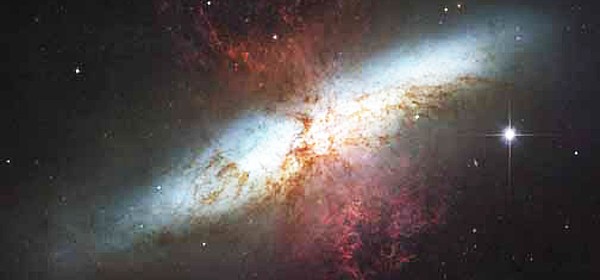
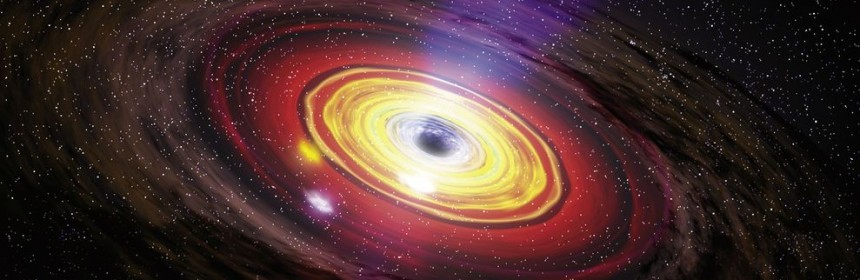
A huge energy flare ripped through the heart of our galaxy about 3.5 million years ago. A blast so extremely powerful, it could be felt 200k light-years away and lasted more than 300k years. A study concluded by researchers in Australia and the U.S. found that the former belief that “our galaxy was an inactive galaxy” may in fact not […]

Read more

A Moon With Water

Astrobiologists searching the heavens for extraterrestrial life have a simple motto: “Follow the water, ”says The Washington Post. Water is an essential ingredient in all earthly biochemistry, so scientists believe it’s logical to look for life first on planets and moons with liquid water.New data from NASA’s Cassini spacecraft indicate that Enceladus, a tiny, ice-encrusted moon orbiting Saturn, may be […]

Read more
1 3 4 5 6