Cartoon – Origin of the universe
We might have a ninth planet out there about 25 times farther out than Pluto from the sun. Some Astronomers have been searching for this planet for three years when it was first thought to be in existence. They believe that it has been hanging out in the outskirts of the solar system and have yet to find its actual […]
Read more
Saturn’s moon Titan may be light-years away from Earth, but the two bodies have many characteristics in common: Wind, rain, volcanoes, tectonics and other Earth-like conditions all sculpt features on Titan, but act in an environment many times colder than Antarctica. “It is really surprising how closely Titan’s surface resembles Earth’s,” said Rosaly Lopes, a planetary geologist at NASA’s Jet […]
Read more
Mysterious plumes of gas rising more than 150 miles above the surface of Mars have left scientists confounded. On two occasions in the spring of 2012, amateur astronomers spotted a cloud developing on the surface of the Red Planet. The plumes, which spanned about 600 miles in diameter and changed shape constantly, appeared within a few hours and remained […]
Read more
Mysterious radio signals from space have been known to repeat, but for the first time, researchers have noticed a pattern in a series of bursts coming from a single source half a billion light-years from Earth. Fast radio bursts, or FRBs, are millisecond-long bursts of radio waves in space. Individual radio bursts emit once and don’t repeat. But repeating fast […]
Read more
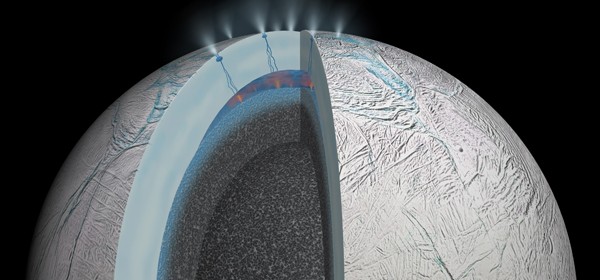
Saturn’s ice-covered moon Enceladus could harbor a warm-water ocean beneath its frozen surface, opening up new possibilities for life beyond Earth. Enceladus has fascinated astronomers since 2005, when NASA’s Cassini probe caught geysers on the moon’s south pole spewing out plumes of salty water. Water that is thought to have originated in an ocean buried beneath the moon’s 25-mile-thick ice […]
Read more
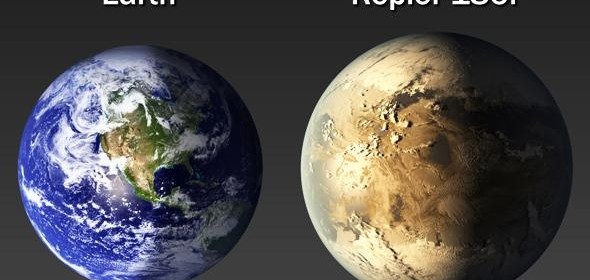
The two most Earth-like planets ever found have been spotted in a single solar system 1,200 light-years away. Astronomers monitoring data from the Kepler spacecraft said the two worlds, dubbed Kepler 62e and Kepler 62f, were the two outermost planets circling a star about a third dimmer and smaller than the sun. Both orbit within the habitable zone within which […]
Read more
Supermassive black holes that have escaped their host galaxies may be wandering the universe alone. Intriguing new observations i by NASA’s Chandra X-ray telescope have | revealed what appears to be a supermassive | black hole being “kicked out of a galaxy at enormous speed,” Francesca Civano of the Harvard-Smithsonian Center for Astrophysics tells Space.com. Astronomers observed two distinct light […]
Read more
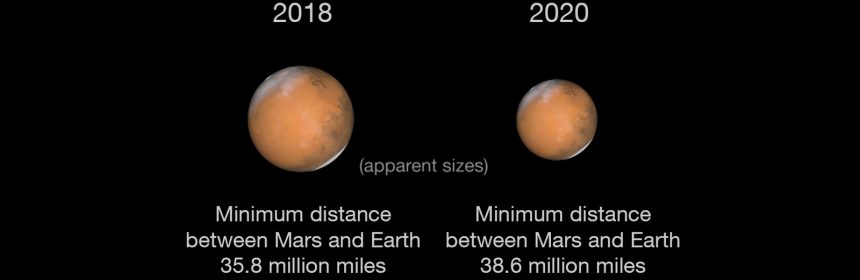
On July 31st, 2018 Mars will be the closest to the Earth than it’s been since 2003. It won’t pass this close to Earth again until September 15th, 2035. So mark the date, and be sure to check it out. In the days leading up to the event known as a Mars Close Approach, Mars will seem brighter in the […]
Read more
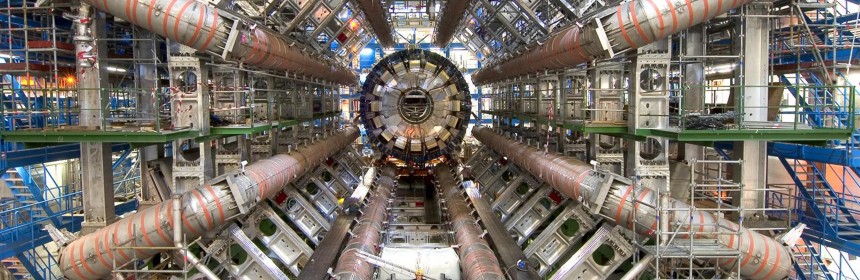
Forty-eight years after British physicist Peter Higgs predicted its existence, the Higgs boson was finally spotted by scientists at the CERN lab in Geneva.The “God particle” explains the existence of mass and backs up the Standard Model, the foundational theory of modern physics. “For physicists, this is the equivalent of Columbus discovering America,” says physicist Themis Bowcock. The Higgs is […]
Read more