Carbon rise keeps water in drylands

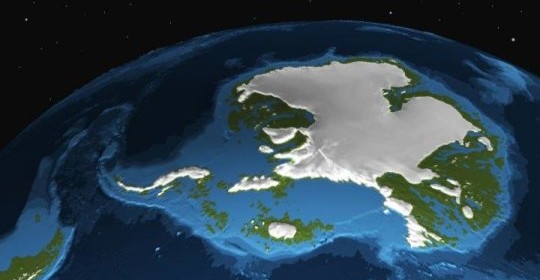
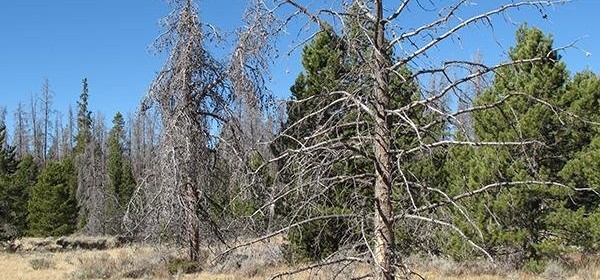
The drylands of the world are getting greener, and researchers think it is thanks to higher levels of carbon dioxide in the atmosphere. In a paradoxical discovery, even as landscapes become increasingly at risk of desertification, they may also look more luxuriant. Two scientists from Purdue University in Indiana, US, and a researcher in Saudi Arabia report in the journal […]

Read more

Killer whales under threat of extinction from toxic ocean chemicals

Killer whales under threat of extinction from toxic ocean chemicals

At least half of the world’s killer whales will become extinct because of toxic waste in the oceans within the next century according to researchers.  Some areas despite efforts to control the pollutants of polychlorinated biphenyls (PCBs) still remain at high levels. Research scientists from the Zoological Society of London (ZSL) are saying that if we don’t bring down the […]

Read more

Reef madness

It seemed like a good idea at the time. In 1972, Broward County, Fla., organized more than 100 boats to dump an estimated 700,000 tires into the Atlantic Ocean in hopes of sparking the growth of an artificial reef. Ultimately corals never grew on the bundles of tires, and over time the bundles became loose, causing damage to nearby natural […]

Read more

A Changing Jet Stream

Climate Changes

Climate change appears to be affecting the jet stream, altering the weather patterns over the U.S. so that regions can get “stuck” in extreme weather for weeks, a new study has found. The jet stream is the fast-moving, high-altitude air current that shuttles weather from west to east over North America and Europe. But the pronounced warming of the Arctic—where […]

Read more

Coral reefs continue to die until carbon output drops

Scientists have concluded for the last decade that more-acidic seas have been harming coral, making it more difficult for coral reefs to grow or regenerate themselves. Conducting an experiment over the course of 22 days, scientists flooded Australia’s Great Barrier Reef with an antacid. They found that by lowering the water’s acidity, it caused the coral to grow. Research has […]

Read more

How the moon was made

How the moon was made

People always wonder how the moon was made. The birth of the planets 4.5 billion years ago was extremely violent. They grew to full size by absorbing rival planet embryos in a series of titanic collisions—one of which probably gave Earth its moon (below). The moon’s large size, low density, and other features suggest that it emerged from an explosion […]

Read more
1 2 3 4 5 6 24