Cartoon – Lab Leftovers


Beijing Fatter and sicker: Prevalence of type 2 diabetes has more than tripled in China over the past decade as Chinese people adopt a more Western diet and lifestyle. “China, unfortunately, has become the world’s capital for diabetes,” said Michael Rosenblatt, chief medical officer of pharmaceutical giant Merck. “The government is starting to pay more attention, as this is the […]
Read more
Nine out of 10 Americans have a chemical called bisphenol A in their urine, said Nicholas D. Kristof. BPA, which can be found in plastic food containers, soup can linings, ATM receipts, and many other consumer products, is a proven “endocrine disruptor”—a substance that mimics or alters human hormones. Studies have already linked BPA to breast cancer, diabetes, and hyperactivity, […]
Read more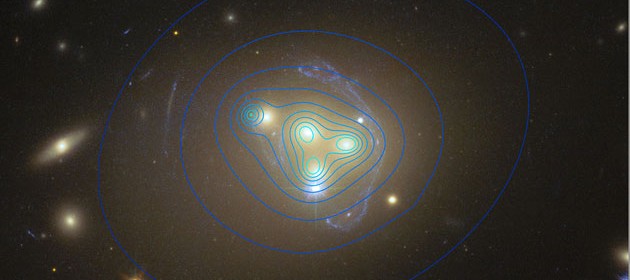
Scientists typically believe that dark matter behaves in a simple way: if one clump encounters another, the two interact solely through gravity. However, researchers have published findings which suggest that there’s more involved. They’ve noticed dark matter (the blue lines in the photo above) lagging behind a galaxy due to friction, hinting that there are factors beyond gravity at work. […]
Read more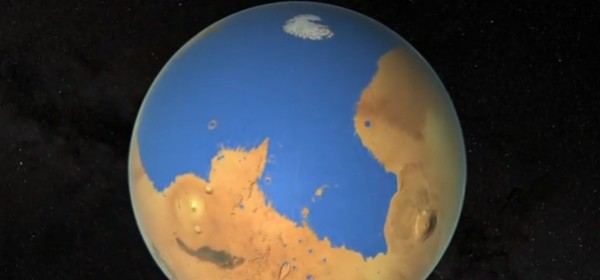
Astronomers have found the strongest evidence yet that ancient Mars had a massive ocean for millions of years— an indication that the Red Planet once had everything necessary to support life. Shortly after Mars formed 4.5 billion years ago, NASA scientists say, the planet was wet, with enough water to cover the entire planet to a depth of about 450 […]
Read more
If you’re worried about infertility, don’t try to Google the term with a computer on your lap, says the London Telegraph. A new experiment suggests that radiation from a single Wi-Fi-enabled laptop may be strong enough to cause cell damage in sperm. Argentine researchers took samples of ejaculated semen and left them directly under a computer—simulating holding a laptop directly […]
Read more
Global warming hits plateau. . . What does that mean for the threat of catastrophic climate change? Why has the warming trend slowed? Climatologists aren’t sure. What they do know is that the average air temperatures at the earth’s surface have risen only about 0.2 degrees Fahrenheit since 1998—the hottest year of the 20th century—even as humanity has continued to […]
Read more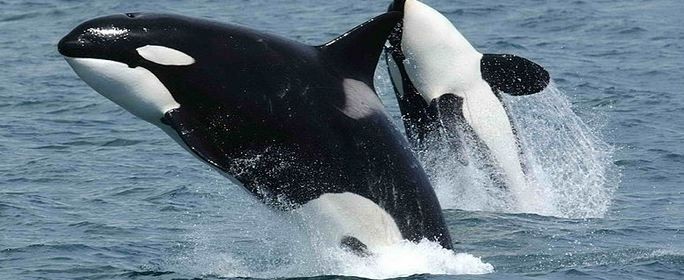
Like many human families, killer whales often rely on the wisdom of matriarchs to help them endure hardships and thrive, new research has found. Male orcas usually live for about 50 years, but females often survive well into their 90s, making them one of the few mammalsthat live for decades after they stop reproducing. Marine scientists studied the behavior […]
Read more
“Knowing what a chicken looks like and what all the chickens before it looked like doesn’t help us to understand the egg,” says Taras Gerya. The ETH Professor of Geophysics uses this metaphor to address plate tectonics and the early history of the Earth. The Earth’s lithosphere is divided into several plates that are in constant motion, and today’s geologists […]
Read more
Scientists from the University of Delaware’s Bartol Research Institute in the Department of Physics and Astronomy have discovered very-high-energy gamma rays in the Cigar Galaxy (M82), a bright galaxy filled with exploding stars 12 million light years from Earth. The gamma rays observed by the team have energies more than a trillion times higher than the energy of visible light […]
Read more