Ice in a planetary cauldron

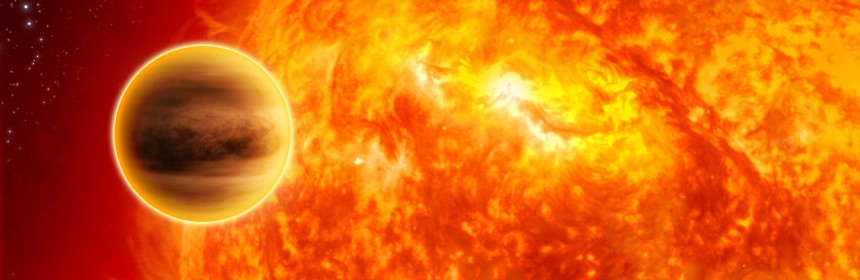
With temperatures in excess of 800 F, Mercury is one of the last places in the solar system you’d expect to find ice. But when NASA’s Messenger spacecraft transmitted its first optical images of the closest planets to the sun, that’s exactly what scientists discovered. Mercury sits about 36 million miles from the sun, which is roughly 57 million miles […]

Read more

Seabin – The Automated Marina Rubbish Collector

The Seabin marine waste collector shows how often the simplest solutions are the most effective. The rubbish collector, designed to float in marinas, inland waterways, residential lakes and harbors, collects floating debris and liquids by sucking water from the surface and letting if flow out through the bottom of the structure, trapping waste in a filter bag. The inventors have […]

Read more

Ozone Hole Over Antarctica

Ozone Hole Over Antarctica

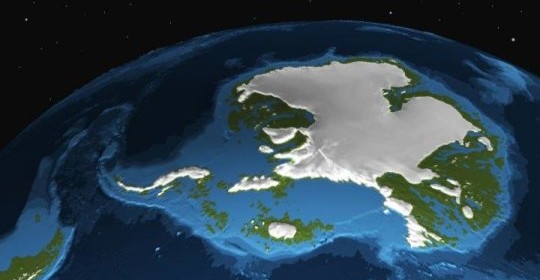
The ozone layer is a protector of the earth from ultraviolet radiation from the sun.  According to reports the ozone layer is getting smaller over Antarctica.  The scientists are using satellites and sensors to get information on the measurements of the ozone layer. Since the early 20th century when the emissions of chemical substances called halo-carbons the ozone layer has […]

Read more

Heat is heading for new extremes

Heatwaves that used to arrive once every 20 years or so could become annual events by 2075 across almost two-thirds of the planet’s land surface – if humans go on burning ever more fossil fuels and releasing ever more greenhouse gases. Claudia Tebaldi, visiting scientist at the US National Center for Atmospheric Research, and Michael Wehner, senior staff scientist at […]

Read more

Starburst galaxy sheds light on longstanding cosmic mystery

Scientists from the University of Delaware’s Bartol Research Institute in the Department of Physics and Astronomy have discovered very-high-energy gamma rays in the Cigar Galaxy (M82), a bright galaxy filled with exploding stars 12 million light years from Earth. The gamma rays observed by the team have energies more than a trillion times higher than the energy of visible light […]

Read more

Antarctica’s Native Insect

Antarctica’s Native Insect - Antarctica Journal News

Antarctica’s native insect, the Antarctic Midge is a flightless insect that can survive nine months frozen at temps of at least negative 15 degrees Celsius.  It loses about 70% of its body fluids and can live for about a month without oxygen.  The midge survives because of its combination of rapid cold hardening and warm temperatures in its underground habitat.  […]

Read more
1 2 3 24