ARE STARS REALLY EATING PLANETS?

ARE STARS REALLY EATING PLANETS?
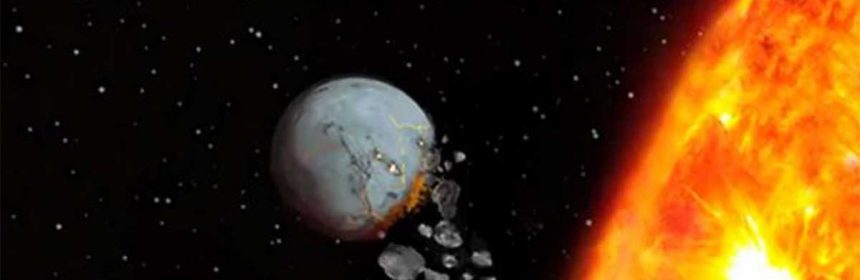
Astronomers have found that Tabby’s Star has been at it again – going through a dimming phase.  Tabby’s star is located in the constellation Cygnus which is about 1600 light years away.  Researchers have come up with the explanation that this star at one time ate a planet which is causing it to flicker.  Some also think that its possibly […]

Read more

The biggest thing in the universe

British astronomers have identified a celestial object so large that it challenges scientists’ basic assumptions about the nature of the universe. Huge-LQG is a cluster of 73 quasars, each of which lies at the center of its own galaxy.The structure measures 4 billion light-years across at its greatest dimension; our own Milky Way galaxy, which is 100,000 light-years across, is […]

Read more

The most Earth-like planet yet

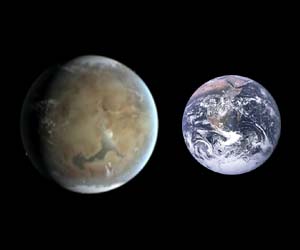
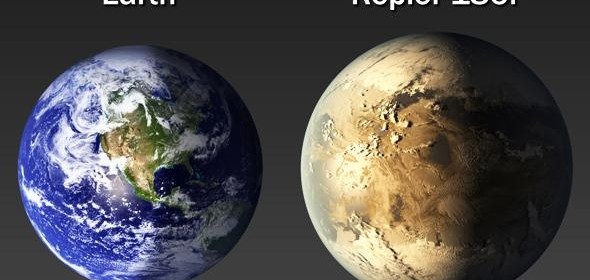
Have we found Earth’s twin? For the first time, astronomers have identified a planet outside our solar system that is both Earth-size and orbits its star in the so-called Goldilocks zone, where temperatures may be “just right” for supporting liquid water—and, therefore, life. Researchers discovered the planet while reviewing data from NASA’s Kepler space telescope, which has spent the past […]

Read more

Ancient Boiling Oceans

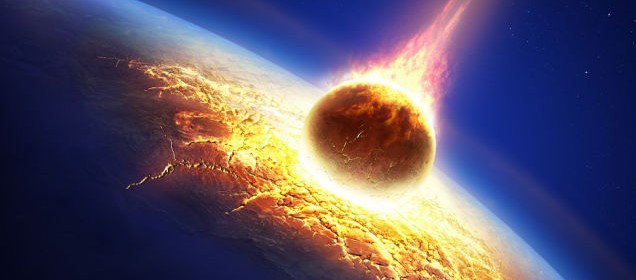
In its early days, Earth became hell. About 3.3 billion years ago, new research indicates, at least two massive asteroids 30 to 60 miles in diameter smashed into this planet, boiling the oceans and sending atmospheric temperatures soaring to an unimaginable 932 degrees Fahrenheit. Stanford University scientists have found evidence of this extreme era in a geological formation in South […]

Read more

The sun takes a rare hiatus

Sunspot activity may be entering a lull for the first time in almost 400 years, offering scientists a rare chance to gauge how solar conditions affect Earth’s climate. “This is highly unusual and unexpected” says Frank Hill, a researcher at the National Solar Observatory. Three new NSO studies suggest that the sun’s fluctuating magnetic field may soon become too weak […]

Read more

Earth’s magnetic shield getting weaker

Earth’s magnetic field is weakening, and could all but disappear within the next 500 years—exposing our planet to intense solar radiation that would scour its surface of life, Reuters.com reports. Researchers say I the geological record indicates that Earth’s * magnetic field tends to switch polarity f every 250,000 years—and that it’s about 550,000 years overdue for a swap, which […]

Read more
1 2 3 4