Gold’s cosmic origins

gold meteor

All the gold on Earth was forged in the collisions of massively dense stars billions of years ago. Astronomers have come to this conclusion after observing and analyzing the afterglow of a crash between two neutron stars in a galaxy 3.9 billion light-years away that yielded a hoard of gold likely equal to the mass of 20 Earths. “At today’s […]

Read more
How the moon was made

How the moon was made

People always wonder how the moon was made. The birth of the planets 4.5 billion years ago was extremely violent. They grew to full size by absorbing rival planet embryos in a series of titanic collisions—one of which probably gave Earth its moon (below). The moon’s large size, low density, and other features suggest that it emerged from an explosion […]

Read more

A Moon With Water

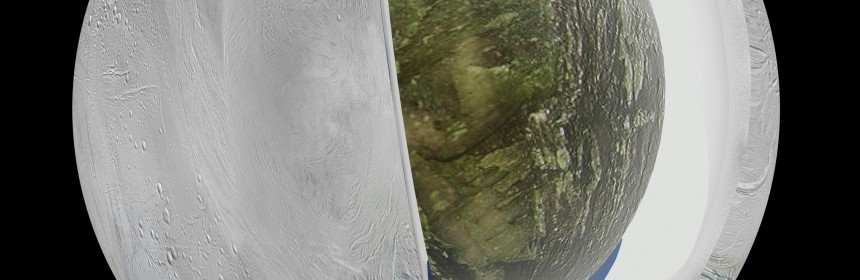
Astrobiologists searching the heavens for extraterrestrial life have a simple motto: “Follow the water, ”says The Washington Post. Water is an essential ingredient in all earthly biochemistry, so scientists believe it’s logical to look for life first on planets and moons with liquid water.New data from NASA’s Cassini spacecraft indicate that Enceladus, a tiny, ice-encrusted moon orbiting Saturn, may be […]

Read more

Jupiter’s Destructive Path

Earth may owe its existence to the planet Jupiter. New research shows that the giant planet played a key role in the formation of the solar system by barreling through it like a cosmic wrecking ball, destroying existing planets and creating debris that coalesced into new ones, including ours. Astronomers began examining this theory after finding that virtually all of […]

Read more

Mapping the moon

Two NASA probes that spent last year orbiting the moon have returned stunning new geological maps that could help explain how it, Earth, and other planets in our solar system formed. The probes, named Ebb and Flow, flew identical orbits just miles above the moon’s surface to measure its gravity field. Slight disruptions in their paths—caused by the push and […]

Read more

Earth’s bigger, older cousins

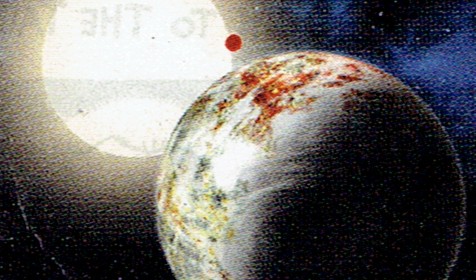
Astronomers have discovered the larg­est rocky planet yet, and its existence has profound implications for our understanding of the early universe and the potential for extraterrestrial life. Kepler-10c, which was spotted by NASA’s Kepler space telescope, has a diameter of roughly 18,000 miles—more than twice that of Earth —prompting scientists to create a new class of planets, dubbed “mega-Earths.”The body’s […]

Read more

Our Galaxy’s Explosive Past

Our Galaxy's Explosive Past

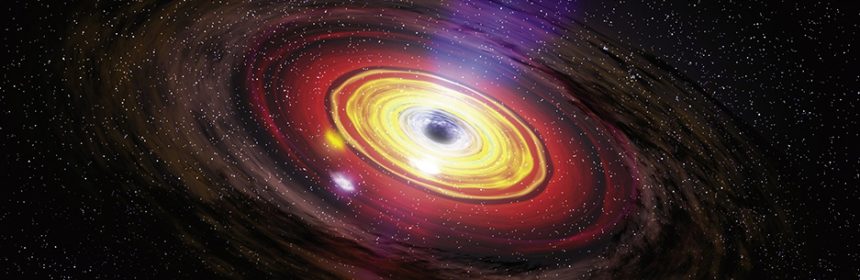
A huge energy flare ripped through the heart of our galaxy about 3.5 million years ago. A blast so extremely powerful, it could be felt 200k light-years away and lasted more than 300k years. A study concluded by researchers in Australia and the U.S. found that the former belief that “our galaxy was an inactive galaxy” may in fact not […]

Read more

Galactic turmoil ahead

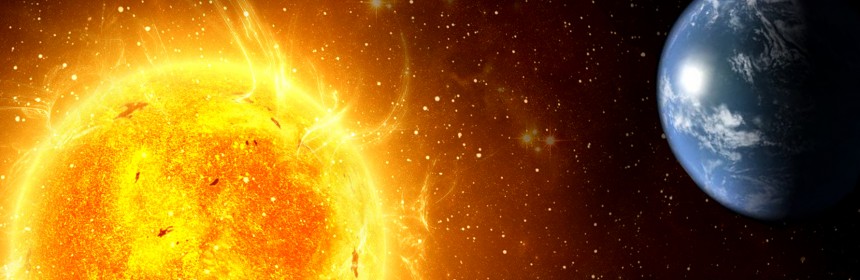
The Milky Way and its closest neighbor, the Andromeda galaxy, are on course for “ a head-on collision,” says astronomer Roeland van der Marel of the Space Telescope Science Institute. But no need for precautions because the crash won’t happen for another 4 billion years. Researchers have long known that Andromeda, currently some 2.5 million light-years away, is moving toward […]

Read more

Visitors from outer space

Visitors from outer space

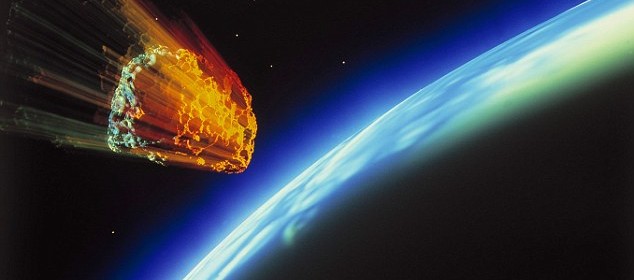
The most common Visitors from outer space… COMETS!! Near misses by comets and asteroids are rare events, but in 2013, predictions were made that earthlings would experience at least three. A menacing, 1,000-foot-wide asteroid named Apophis which passed within 9 million miles of our planet—close by astronomical standards. Dubbed “the doomsday asteroid,” Apophis has an elliptical orbit around the sun […]

Read more
1 2 3 4