The sun takes a rare hiatus

Sunspot activity may be entering a lull for the first time in almost 400 years, offering scientists a rare chance to gauge how solar conditions affect Earth’s climate. “This is highly unusual and unexpected” says Frank Hill, a researcher at the National Solar Observatory. Three new NSO studies suggest that the sun’s fluctuating magnetic field may soon become too weak […]

Read more

Depressed? Blame the heavens

Scientists have long laughed at astrology’s underlying premise—that celestial events can influence human emotions and behavior. But a series of new studies has produced evidence that at least one kind of astronomical event—solar flares—may, in fact, affect human beings. Periodically, the sun erupts with large storms that hurl waves of electromagnetically charged particles into space, altering Earth’s own magnetic field. […]

Read more

Tremors from fracking

Prague, Okla Tremors from fracking: Scientists have linked Oklahoma’s largest earthquake—a 5.6 magnitude quake near the town of Prague, in 2011—to hydraulic fracturing, supporting claims that the process increases seismic activity. Fracking, as it is known, injects water and chemicals into petroleum deposits in order to extract trapped gas. This week, researchers at the University of Oklahoma, Columbia University, and […]

Read more

The biggest thing in the universe

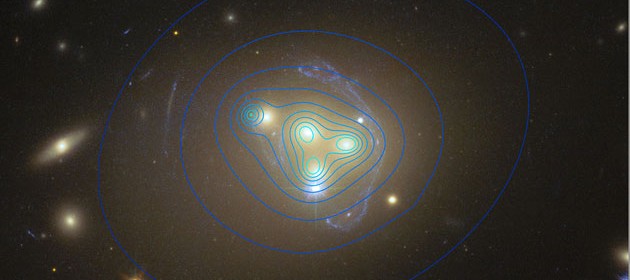
British astronomers have identified a celestial object so large that it challenges scientists’ basic assumptions about the nature of the universe. Huge-LQG is a cluster of 73 quasars, each of which lies at the center of its own galaxy.The structure measures 4 billion light-years across at its greatest dimension; our own Milky Way galaxy, which is 100,000 light-years across, is […]

Read more

Autism caused by packaging chemicals?

Packaging materials causing autism

Nine out of 10 Americans have a chemical called bisphenol A in their urine, said Nicholas D. Kristof. BPA, which can be found in plastic food containers, soup can linings, ATM receipts, and many other consumer products, is a proven “endocrine disruptor”—a substance that mimics or alters human hormones. Studies have already linked BPA to breast cancer, diabetes, and hyperactivity, […]

Read more

A warmer world will be a hazier one

Aerosols, tiny solid and liquid particles suspended in the atmosphere, impact the environment by affecting air quality and alter the Earth’s radiative balance by either scattering or absorbing sunlight to varying degrees. What impact does climate change, induced by greenhouse gases (GHGs), have on the aerosol “burden”–the total mass of aerosols in a vertical column of air? Past research done […]

Read more

The world’s largest virus

A huge virus discovered in sediment on the Chilean coast and another in an Australian pond are not only the largest scientists have ever seen, but also among the most baffling. A single so-called pandora virus is 1,000 times the size of the influenza virus and holds 2,556 genes, compared with the flu’s 13. Only 6 percent of its genes […]

Read more
1 2 3 11