Our sun’s hotter sister

Stars are not born alone. Rather, they emerge from clouds of gas and dust in groups of up to 10,000, then slowly scatter through space. For the first time, astronomers have identified a star that came from the same solar nursery as our sun, some 4.5 billion years ago. This stellar relative—located 110 light-years away in the constellation Hercules—is hotter […]

Read more

InSight Steers Toward Mars

InSight Steers Toward Mars

NASA’s InSight Steers Toward Mars. The InSight lander has made its first course correction towards Mars. InSight, short for Interior Exploration using Seismic Investigations, Geodesy and Heat Transport, is the first mission dedicated to exploring the deep interior of Mars. The lander is currently encapsulated in a protective aeroshell, which launched on top of an Atlas V 401 rocket on […]

Read more

ARE STARS REALLY EATING PLANETS?

ARE STARS REALLY EATING PLANETS?

Astronomers have found that Tabby’s Star has been at it again – going through a dimming phase.  Tabby’s star is located in the constellation Cygnus which is about 1600 light years away.  Researchers have come up with the explanation that this star at one time ate a planet which is causing it to flicker.  Some also think that its possibly […]

Read more

Life-friendly lake on mars

NASA scientists have discovered evidence that a large freshwater lake existed on Mars billion of years ago, further strengthening the case that Earth’s neighbor once harbored life.The lake was part of a network of waterways that could have lasted thousands or even millions of years—possibly long enough for simple organisms to take hold there.Those conclusions come from an analysis of […]

Read more

Titan’s Surface Much Like That of Earth

Titan's Surface Much Like That of Earth

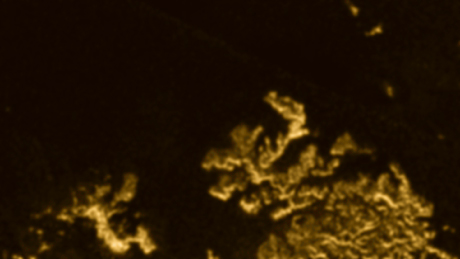
Saturn’s moon Titan may be light-years away from Earth, but the two bodies have many characteristics in common: Wind, rain, volcanoes, tectonics and other Earth-like conditions all sculpt features on Titan, but act in an environment many times colder than Antarctica. “It is really surprising how closely Titan’s surface resembles Earth’s,” said Rosaly Lopes, a planetary geologist at NASA’s Jet […]

Read more

The biggest thing in the universe

British astronomers have identified a celestial object so large that it challenges scientists’ basic assumptions about the nature of the universe. Huge-LQG is a cluster of 73 quasars, each of which lies at the center of its own galaxy.The structure measures 4 billion light-years across at its greatest dimension; our own Milky Way galaxy, which is 100,000 light-years across, is […]

Read more
1 2 3 4 5 6