How the moon was made

How the moon was made

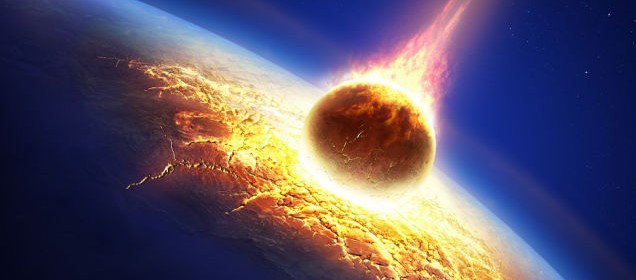
People always wonder how the moon was made. The birth of the planets 4.5 billion years ago was extremely violent. They grew to full size by absorbing rival planet embryos in a series of titanic collisions—one of which probably gave Earth its moon (below). The moon’s large size, low density, and other features suggest that it emerged from an explosion […]

Read more

Astronomical Declaration

Deep space

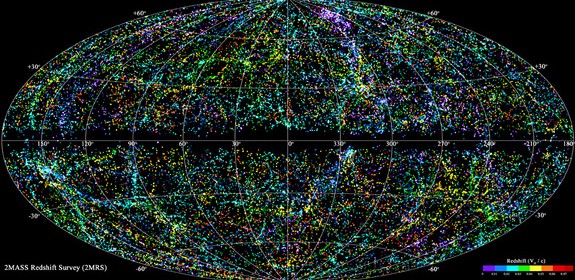
Scientists have made an astronomical declaration, stating that there is likely ten times the amount of galaxies in our universe than originally expected. The previous amount was believed to be about 200 billion, but now it is believed to be much more. According to astronomers from the University of Nottingham, we are just beginning to learn exactly how vast our […]

Read more

Galactic turmoil ahead

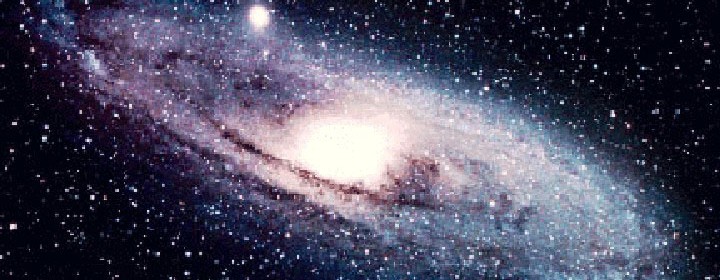
The Milky Way and its closest neighbor, the Andromeda galaxy, are on course for “ a head-on collision,” says astronomer Roeland van der Marel of the Space Telescope Science Institute. But no need for precautions because the crash won’t happen for another 4 billion years. Researchers have long known that Andromeda, currently some 2.5 million light-years away, is moving toward […]

Read more

Visitors from outer space

Visitors from outer space

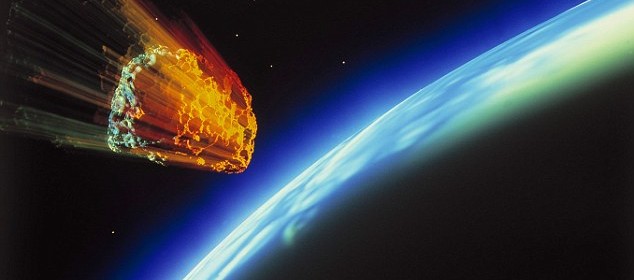
The most common Visitors from outer space… COMETS!! Near misses by comets and asteroids are rare events, but in 2013, predictions were made that earthlings would experience at least three. A menacing, 1,000-foot-wide asteroid named Apophis which passed within 9 million miles of our planet—close by astronomical standards. Dubbed “the doomsday asteroid,” Apophis has an elliptical orbit around the sun […]

Read more

Our sun’s hotter sister

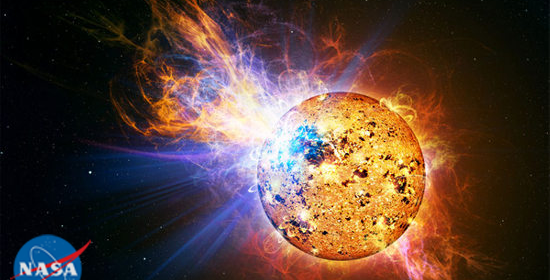
Stars are not born alone. Rather, they emerge from clouds of gas and dust in groups of up to 10,000, then slowly scatter through space. For the first time, astronomers have identified a star that came from the same solar nursery as our sun, some 4.5 billion years ago. This stellar relative—located 110 light-years away in the constellation Hercules—is hotter […]

Read more

ARE STARS REALLY EATING PLANETS?

ARE STARS REALLY EATING PLANETS?

Astronomers have found that Tabby’s Star has been at it again – going through a dimming phase.  Tabby’s star is located in the constellation Cygnus which is about 1600 light years away.  Researchers have come up with the explanation that this star at one time ate a planet which is causing it to flicker.  Some also think that its possibly […]

Read more

Titan’s Surface Much Like That of Earth

Titan's Surface Much Like That of Earth

Saturn’s moon Titan may be light-years away from Earth, but the two bodies have many characteristics in common: Wind, rain, volcanoes, tectonics and other Earth-like conditions all sculpt features on Titan, but act in an environment many times colder than Antarctica. “It is really surprising how closely Titan’s surface resembles Earth’s,” said Rosaly Lopes, a planetary geologist at NASA’s Jet […]

Read more
1 2 3 4