Galactic turmoil ahead

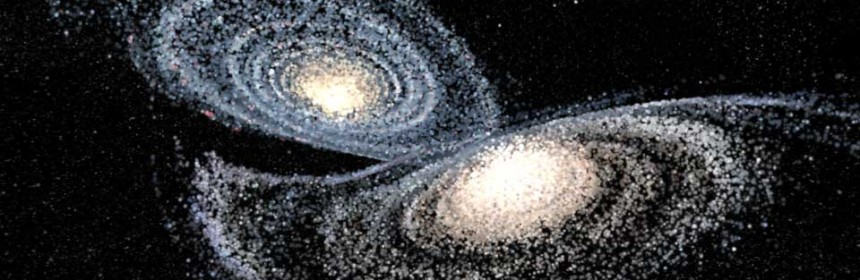
The Milky Way and its closest neighbor, the Andromeda galaxy, are on course for “ a head-on collision,” says astronomer Roeland van der Marel of the Space Telescope Science Institute. But no need for precautions because the crash won’t happen for another 4 billion years. Researchers have long known that Andromeda, currently some 2.5 million light-years away, is moving toward […]

Read more

Visitors from outer space

Visitors from outer space

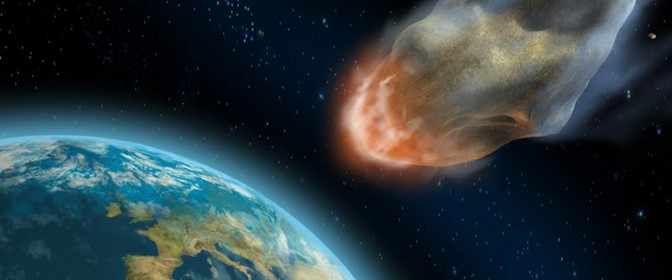
The most common Visitors from outer space… COMETS!! Near misses by comets and asteroids are rare events, but in 2013, predictions were made that earthlings would experience at least three. A menacing, 1,000-foot-wide asteroid named Apophis which passed within 9 million miles of our planet—close by astronomical standards. Dubbed “the doomsday asteroid,” Apophis has an elliptical orbit around the sun […]

Read more

Orbital Chaos Inevitable

It’s a little bit less certain that the inner planets— Mercury, Venus, Earth, and Mars—will still be around to die that way. “There is a one percent chance the inner solar system will go dramatically unstable during the next five billion years,” says Laughlin. The problem is a weird long-distance connection between Jupiter and Mercury. When Jupiter’s closest approach to […]

Read more

Earthquakes- What Are They?

Earthquakes- What Are They

Earthquakes are the result shifting plates in the crust of Earth. When there is frictional stress building of the plates it causes failure at a fault line an earthquake happens.  The shaking of the ground happens when the energy is released, and waves radiate.  Research has found that they predict where major seismic activity may happen, but they cannot forecast […]

Read more

The Seasons Of Antarctica

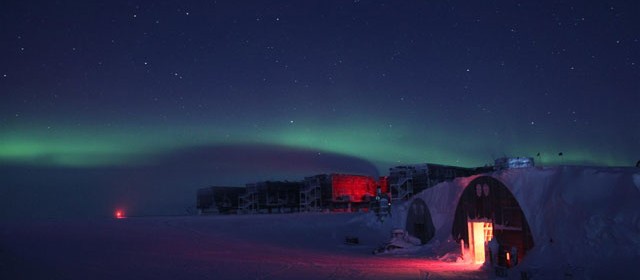
Winter in Antarctica, it is dark all of the time. In the Antarctic summer, (between January and March, when there is plenty of daylight—twenty-four hours a day! In September, the Sun rises, and then doesn’t set again until March. Why does Antarctica have six whole months of darkness in the winter and six whole months of lightness in the summer? […]

Read more

The most Earth-like planet yet

Have we found Earth’s twin? For the first time, astronomers have identified a planet outside our solar system that is both Earth-size and orbits its star in the so-called Goldilocks zone, where temperatures may be “just right” for supporting liquid water—and, therefore, life. Researchers discovered the planet while reviewing data from NASA’s Kepler space telescope, which has spent the past […]

Read more

Earth’s bigger, older cousins

Astronomers have discovered the larg­est rocky planet yet, and its existence has profound implications for our understanding of the early universe and the potential for extraterrestrial life. Kepler-10c, which was spotted by NASA’s Kepler space telescope, has a diameter of roughly 18,000 miles—more than twice that of Earth —prompting scientists to create a new class of planets, dubbed “mega-Earths.”The body’s […]

Read more
1 2 3 4